Artemis II: What Comes Next?
'Phew, that mission was Amazing! I sure hope there’s more to come….' Well, you are in luck - there is a LOT more to come!

You will no doubt have seen the great success of the Artemis II mission, which marks the second in a program of ambitious missions to take humans back to the Moon. But, NASA are not done yet!
In fact, they are only just getting started…
Next for the Mission
The Artemis II mission had a number of different objectives:
1. Test the Spacecraft Systems
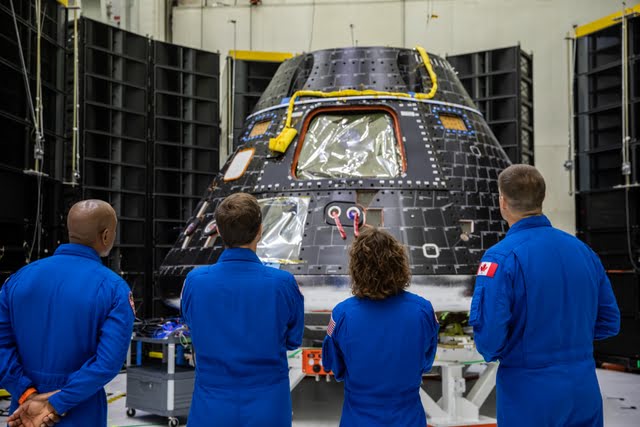
The main goal of the mission was to test the systems of the Orion spacecraft (used for the Artemis missions [pictured above]) and its suitability for human spaceflight. Initial testing was completed in 2022 with the Artemis I mission, which found that the spacecraft could successfully travel the distance required and perform the complex operations needed for lunar missions. However, Artemis I was uncrewed. This means that the initial mission, whilst a good test, could not test how well the craft supported humans, nor could it test the manual systems.
So, Artemis II acted as an ‘acid test’ for human spaceflight back to the Moon. Over the coming months, the data collected from the mission will be analysed alongside astronaut feedback to improve the design of the spacecraft and its systems for future missions.
2. Record the Effects of Spaceflight on Human Health
During the course of the mission, five experiments into human health were performed on the Artemis II crew. These experiments aimed to investigate how spaceflight affects our bodies, looking at everything from sleep quality to bone marrow.
Since 2018, NASA has been running their Spaceflight Standard Measures study, which collects a standard set of data from all astronauts during their missions. The study has so far found great success with the crews of the International Space Station, and Artemis II marks the first time data has been collected on a long distance journey for the experiment - making up for the lack of data from the Apollo program.
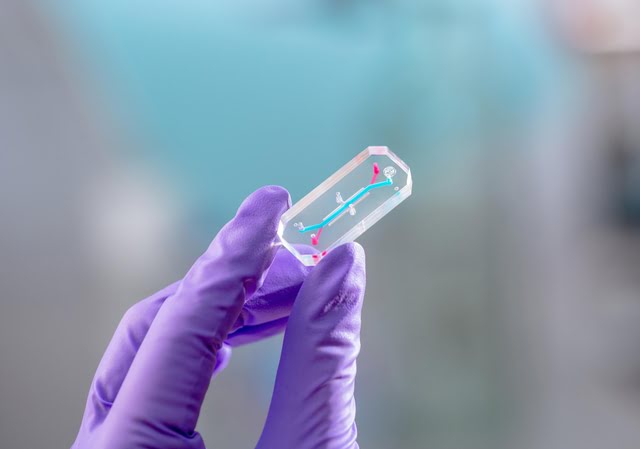
Another of the experiments (AVATAR) used organ-on-a-chip technology [pictured above] to emulate bone marrow tissue (made from astronaut blood samples) which were monitored both throughout and after the mission. Scientists are interested in the harsh conditions posed by space, particularly the high levels of radiation present, and sensitive but vital bone marrow tissue provides the prefect worst-case-scenario for testing.
NASA are also investigating astronaut sleep, stress, cognition, and teamwork in their ARCHeR research project. These factors were tracked thanks to wristbands using similar technology to smartwatches and fitness trackers. The data were used throughout the mission to monitor astronaut health in real time and make safety assessments, whilst they are currently being analysed to help plan better missions and crew support systems.
The data collected from science experiments completed during the mission are still being analysed. More information is available on the NASA website.
3. Make Lunar Observations
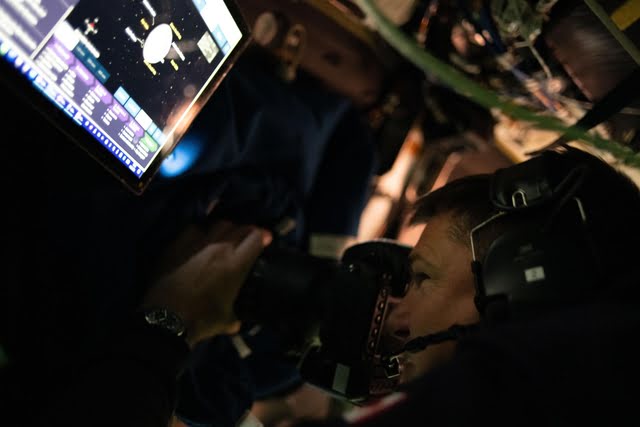
Perhaps the most publicised part of the Artemis II mission is the beautiful images of the Moon. However, it was not just pretty pictures, the lunar flyby served a very important purpose: making observations of the dark side of the Moon.
Human eyes are incredibly valuable assets, allowing us to observe and notice very small changes in colours and textures. This was utilised during the mission when the astronauts made their observations of the lunar surface.
Across the flyby period, the Artemis II crew recorded their impressions of the geography and geology of the Moon through both images and audio recordings, alongside having discussions with scientists located in mission control which allowed them to target specific areas of interest in real time.
Once again, the data collected from the lunar flybys are still being analysed, and will continue to be for many years to come. The images of the Moon taken during the mission will form part of NASAs extensive collection of lunar observations, including data from both the Apollo and Lunar Reconnaissance Orbiter missions, which allows scientists to revisit data and continue ask new questions of it.
You can view a selection of images from the mission in my previous article.
Next for the Program
Artemis II was given the number “II” for a reason: it was the second in the Artemis program of missions. But, it was not the final mission! NASA has many more missions planned for the program, which promises to bring us properly back to the Moon…
Artemis III
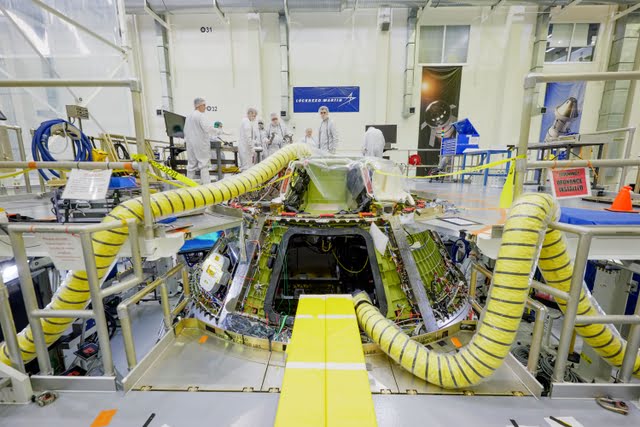
The next mission in the Artemis program (Artemis III) aims to test the compatibility of the Orion spacecraft with commercial landers from SpaceX (Starship HLS) and Blue Origin (Blue Moon). To do this, the crewed mission will reach low Earth orbit before testing the docking abilities of the spacecraft.
Yes, this mission will not be going to the Moon. But, it is extremely important that systems and spacecraft are tested before being deployed on long distance missions. The current plan is that the Orion spacecraft, launched on the Space Launch System (SLS), will travel the distance to the Moon whilst commercial landers will travel the final distance to the lunar surface. Hence these landers are a pretty big deal.
NASA has not yet confirmed many details of this mission, including exactly which landers they will be testing, but they are targeting a launch window in mid 2027 - closer than you probably thought!
Artemis IV and Beyond
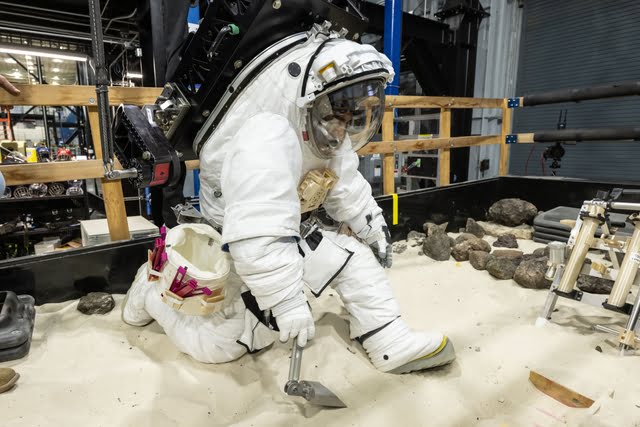
Next on the agenda if Artemis III is successful is the mission we are all waiting for: the return of humans to the lunar surface.
The Artemis IV mission aims to use the SLS, Orion spacecraft, and a commercial lander to revisit the Moon. This crucial milestone will have astronauts land at the lunar South Pole to collect samples and observations for analysis - the first such samples since Apollo 17 in 1972.
Spacesuit testing for the lunar landing is currently in progress and will run alongside the Artemis III mission, with the AxEMU suits built by Axiom Space. The suits will be the most advanced ever built, protecting astronauts from the full range of hazards posed by the Moon: temperature, radiation, surface material, and much more.
If all goes to plan, the mission will take place in early 2028, and will produce a template for the Artemis program to send many more missions back to the lunar surface. Exciting stuff!
Sources
- NASA Communications (2023). Spacesuit for NASA’s Artemis III Moon Surface Mission Debuts. NASA. [online] 15 Mar. Available at: nasa.gov/humans-in-space/spacesuit-for-nasas-artemis-iii-moon-surface-mission-debuts [Accessed 21 Apr. 2026].
- National Aeronautics and Space Administration (2026). Artemis II Priorities and Objectives. [online] Available at: nasa.gov/wp-content/uploads/2026/03/artemis-ii-mission-prioirities-objectives-.pdf [Accessed 21 Apr. 2026].
- National Aeronautics and Space Administration (2026). Artemis II Reference Guide. [online] Available at: nasa.gov/wp-content/uploads/2026/01/a2-reference-guide-012825.pdf [Accessed 21 Apr. 2026].
- National Aeronautics and Space Administration and Baird, D. (2026). Artemis III. [online] NASA. Available at: nasa.gov/mission/artemis-iii [Accessed 21 Apr. 2026].
- National Aeronautics and Space Administration and Baird, D. (2026). Artemis IV. [online] NASA. Available at: nasa.gov/mission/artemis-iv [Accessed 21 Apr. 2026].
- National Aeronautics and Space Administration and Massengill, D. (2024). Artemis. [online] NASA. Available at: nasa.gov/humans-in-space/artemis [Accessed 21 Apr. 2026].
Image Credit:
- “Artemis II Recovery” by NASA/Bill Ingalls, [modified], via NASA Multimedia
- “KSC Orion Media Day – Artemis II Crew” by NASA/Kim Shiflett, via NASA Multimedia
- “Emulate_AVATAR_OrganChip_gloved” by NASA, via NASA Multimedia
- “Lunar Flyby Observations – CSA astronaut Jeremy Hansen” by NASA, via NASA Multimedia
- “Artemis III Orion Crew Module” by NASA/Rad Sinyak, via NASA Image and Video Library
- “Artemis III Lunar Spacesuit Testing” by NASA/Bill Stafford, via NASA Image and Video Library
- Mission patches from NASA