You Can Help Too!
Thu, 9 Apr, 2026
Read in 4 minutes
Science is open and collaborative, and that includes you, too! Find out how you can get involved in citizen science in this article.
As the great communicator Carl Sagan once said, “we live in a society exquisitely dependent on science and technology, in which hardly anyone knows anything about science and technology.” I invite you today to join the group of “hardly anyone” and unite with us in our pursuit of knowledge - by doing science.
‘But, Neo, how can I possibly do science?!’ Well, let me show you - here are three ways you can get involved:
Online Projects
Advisory
Online projects are likely to change; whether current projects finish or are abandoned, or new projects begin, the specific examples I use here will not exist forever. Efforts will be made to maintain links, but please be make sure to check individual projects before sharing my links or embarking on your next citizen science journey.
There are hundreds of online science projects currently open for you to join. Whether you are interested in the particle physics at CERN, the corals of Queensland, or the health of rhesus macaques, there are projects for everyone!
Whilst taking part in online projects, you will learn not just what scientists do (mostly in classifying and processing data), but also what exactly it is they are investigating. Every project aims not just to get your support, but also to educate you on the real science behind the project and your efforts.
SciStarter has put together a list of over 200 projects that you can get involved with right now!
There are a few excellent projects that I would like to give special mentions to…
Eyewire
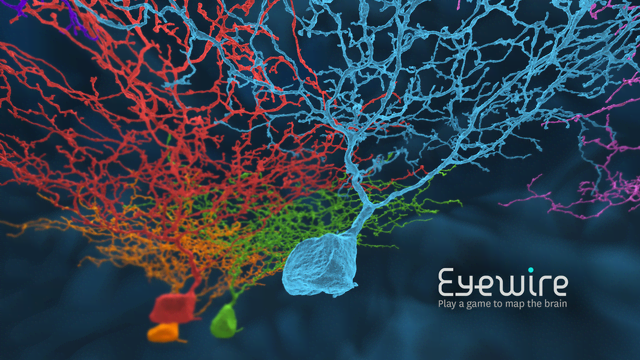
Established in 2012, Eyewire is a project which aims to map all of the neurons in the human eye. By combining real brain scans with the mapping efforts of hundreds of thousands of volunteers, they have successfully mapped over 700 retinal neurons.
But, they still need more help! Their project is completely free to join and structured like a video game - making mapping both engaging and rewarding.
NASA Science
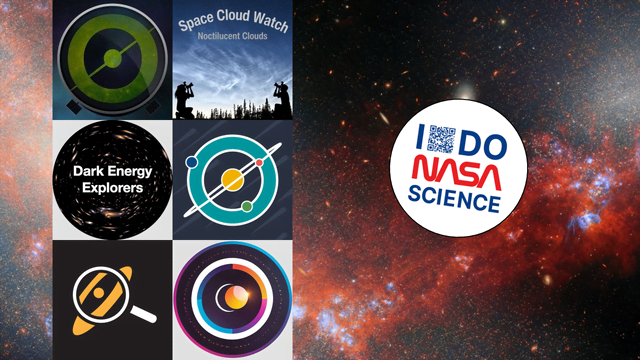
NASA (the US National Aeronautics and Space Administration) has a number of interesting and exciting projects covering everything from galaxy identification to cloud watching. There are currently over 40 projects to choose from and each one involves actual NASA science!
Idle Compute Projects
But, sometimes, we just simply do not feel like doing things. That is fine too! So long as you have a computer, you can contribute to science without lifting a finger - although, be warned, it does take time to setup first…
Volunteer computing uses your idle compute power - that is, the hardware of your computer whilst you are not using it - to run programs submitted by research organisations. By running the programs, your computer processes data on behalf of the organisations and produces useful results.
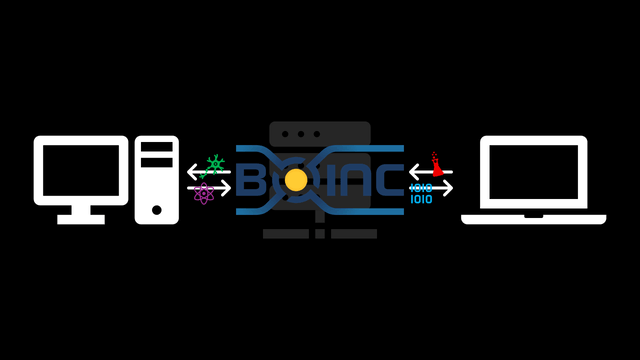
Of course, these systems rely on using many computers, with over 4 million users already using the largest volunteer computing network: BOINC (the Berkeley Open Infrastructure for Network Computing). Released in 2002 by the University of California, Berkeley, BOINC is a program which allows you to enrol your computer in volunteer computing projects, such as PrimeGrid, LHC@home, and Einstein@Home.
To find out more, head over to the BOINC website and read through their user manual, which provides a guide for how to get started. It may take a while to setup, but it is more than worth it!
Citizen Science Month
Every April, the scientific community celebrates Citizen Science Month, encouraging more people to get involved with and learn bout science. It is no coincidence that this article releases in early April…
This month is a fantastic opportunity to start taking part in citizen science, and I hope it kicks off efforts that last you a lifetime… If you want to join in-person, there are also plenty of events to get stuck into during the month, so keep an eye out!
Sources
Information was sourced from SciStarter, the NASA website, and Wikipedia.
Read more about how I use Wikipedia.
Image Credit:
- “Silhouette of Person Under Starry Sky” by Thirdman, [modified], via Pexels
- “EyeWire: A Game to Map the Brain” by Seung Lab, CC BY-NC 2.0, via Flickr
- “A dance of dwarf galaxies” by ESA/Webb, CC BY 4.0 [modified], via ESA/Webb Images
The NASA science project logos and BOINC logo are copyright to their respective organisations.