Five Climate Myths
Sat, 25 Jul, 2026
Read in 16 minutes
The climate crisis is worse than you think.
With the world seemingly in more of a mess than ever before, climate change is pushed back as an issue far too often, with awareness requiring extreme weather events that thrust the problem into the fore only for it to be swiftly forgotten once things return back to normal.
Unfortunately, I have to admit that this article is the result of one such event, a heatwave that forced many of us in the UK to rethink this vast crisis. My contribution? An effort to highlight just how bad this problem really is…
1. Electric Cars Are the Future
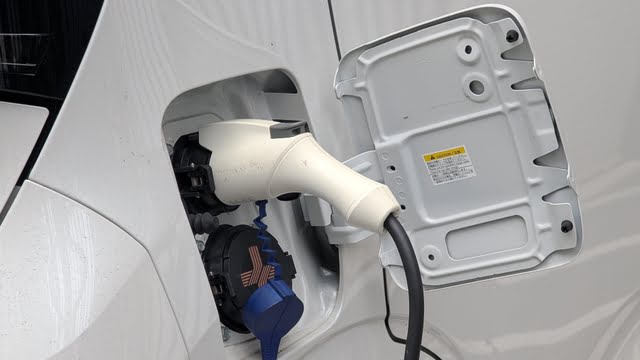
This is not intended as a dig at anyone who owns an electric car, they are a fantastic invention which in fact predate the petrol and diesel car. If we had continued with electric cars and never explored alternative fuel sources, the world would be a very different place - with fewer greenhouse gas emissions.
But, unfortunately, we chose to go with petrol and diesel cars over electric. This puts us in a very different place. This is - first and foremost - because we now have to build not just cars, but the infrastructure for them. The infrastructure for electric cars ranges from electric charging points in houses and service stations to power plants and the energy distribution grid.
Individual electric charging points may not have large environmental costs, but with most of them constructed from metals and plastics, they are still not a net-zero product - and with thousands still needed to be installed if we are to make the switch to electric cars, that soon adds up. But, that is a minor point compared to the problem of powering it all.
To use electric cars sustainably, we need to power them sustainably. However, much of the power we use today is still produced from fossil fuels like oil and natural gas. We cannot call electric cars sustainable until they are powered from entirely sustainable sources. That means we need to build more renewable power sources and cut down our reliance on fossil fuels.
But who is responsible for creating this infrastructure? Is it the energy companies, the government, or us as consumers? Whilst we can certainly lobby for more renewable energy, the real changemakers of that list have many conflicts of interest, with energy companies driven by profit and the government controlled by the demands of industry. So that part, it seems, lies with us.
Aside from the infrastructure, if we look at electric cars themselves, I find it hard to believe that they can ever be classed as sustainable. To begin with, they have higher production energy costs than traditional petrol and diesel cars - at roughly 1.37 times the cost on average. The batteries themselves are manufactured from cobalt and lithium, rare metals with energy-intensive processing and manufacturing requirements.
The cobalt and lithium is, in fact, an even bigger problem than it first seems. Only a limited amount of these metals is recycled (or able to be recycled) and so a large proportion is still mined. In addition, they are extremely challenging and dangerous to work with, requiring the use of harmful chemicals for both humans and the environment, alongside the mining process causing large-scale ecosystem destruction.
I could try to put this all in a positive light by saying that the environmental cost of lithium and cobalt mining is much less than to produce fossil fuels, but it feels redundant when there is still a very real cost compared to things like public transport.
Yes, I mention public transport. I accept it is not always the answer, but, as a transport method with much greater efficiency and less reliance on battery power, they seem an incredibly viable alternative for our daily commutes and medium-distance travel. And that is not even mentioning how many of us can walk and cycle to many of the places close to us - sometimes we just need to put the environment ahead of convenience, as inconvenient as that may be…
The current debate in my mind is over the best alternative for things like shopping trips and long-distance travel, when there is an additional need for storage space. Do we rent cars or vans for this? Or should we improve public transport to make more space? Or even use hydrogen-powered vehicles? There is no right answer, but a lot of interesting ideas still to be considered.
2. Recycling Is Sustainable
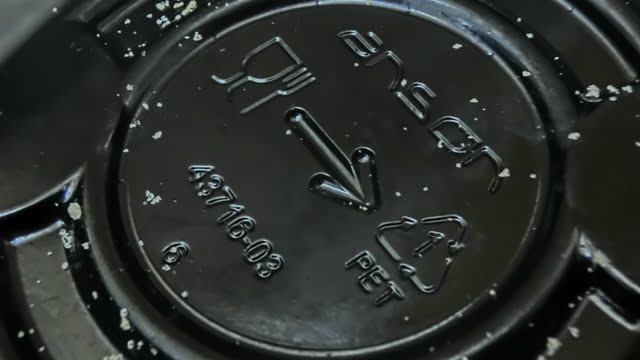
As someone who has grown up with recycling, this feels somewhat hard to say, but recycling is not the silver bullet we think it is. You cannot continue to recycle materials indefinitely, they wear out and degrade over time. And, to make things worse, the recycling system itself is a convoluted mess of confusing legislation.
Many of us see plastic and pop it into the recycling almost without thought, but whilst we think that is a good thing to do, there are many things to look out for before simply putting stuff in the bin - so much that I could almost write an entire article just about recycling… But I won’t, not yet.
One main problem with this approach is that items need to be properly cleaned before they can be recycled, and this is best done before it goes in the bin. Whilst recycling plants are able to clean your waste, they use more abrasive techniques than we would at home, which produces microplastics and chemical waste that can get into our rivers and seas.
Another key problem with our recycling efforts is that there is no single agreed list of recycling items for the country. Nottingham City Council accept plastic film lids in the recycling, whilst people living in Birmingham have to simply throw them away. It is the same story with batteries. I could go on, there are lots of differences and researching this takes a surprisingly long amount of time. Take a look at the website for your local council to double-check what you can (and cannot) recycle.
This inconsistency means that many people either put too much or too little in their recycling bin. Either way feels pretty bad when you consider how much extra time it takes to sort through lots of unrecyclable items - all of which get thrown straight to landfill or waste-to-energy schemes.
Who is to blame for this, then? It depends who you ask. The main problem is that there simply is not the infrastructure in every locality to cope with the large amounts of apparently recyclable items we produce. Maybe there is a solution, but it seems unlikely to come any time soon.
But, more to the point, plastics cannot be endlessly recycled. The complex polymer chains inside every bit of plastic degrade as they go through heating and reforming cycles until, by the fifth cycle, the plastic is much weaker and used to produce products with lower structural standards. This means that a recycled plastic water bottle ends up as film packaging on fruit and vegetables, rather than returning to become another bottle.
And, one plastic reaches the end of its life, it ultimately ends up in landfill, where it takes millions of years to fully break down. Which means that our seemingly endless demand for plastic must be fuelled from our ever-decreasing crude oil reserves. And, to curb our reliance on fossil fuels, plastics will have to go too. (Unless we ever figure out the key to endless recycling or sustainable artificial plastics…)
3. We Need to be Net Zero

To put it plainly, net zero just means that we release the same amount of greenhouse emissions into the atmosphere as we take out. Or, that there is not ‘net’ change in the amount of greenhouse gases in the atmosphere.
For a long time, companies have aimed to be net zero and it is the purpose of most life cycle assessments - evaluations of the environmental impact of products and the activities of companies. But, whilst we can release greenhouse gases into the atmosphere immediately, can the same be said of our efforts to remove them?
Most people’s answer to removing greenhouse gases from the environment is planting trees and creating more green spaces, but this is not an immediate process. The greenhouse gases that have been emitted in an instant take much more time to be absorbed by plants, leading companies to simply throw more trees at the problem. This, in turn, introduces the interesting question of when we are to stop reforesting the world - space is not endless and we will run out of room for plants eventually.
And what, exactly, do plants absorb? The process of photosynthesis captures carbon dioxide and releases oxygen back into the atmosphere. This only accounts for the headline driver of climate change. In fact, methane is a much more potent greenhouse gas than carbon dioxide and accounts for an additional 28 % of the warming effect (carbon dioxide makes up 44 %).
To combat some of these problems head-on, new ‘carbon capture’ facilities are being built which aim to remove greenhouse gases from the air and from source - preventing them from ever reaching the atmosphere. But, these efforts will do nothing to reverse our course unless we build a culture of ‘more than net zero,’ removing more gases than the atmosphere than we would need to just be net zero.
That is, for our efforts to make a far greater difference, we need to return to pre-industrial levels of greenhouse gases. Some of that change will come from carbon capture, but I would argue that it starts with companies avoiding practices which have environmental effects. Being proactive rather than just accountable is the way forwards.
As an aside, there is a whole other unspoken battle going on here with aerosols - the other cause of climate change. This is well worth mentioning, but sadly would make this section far too long. If you are curious there is a link in the sources below for more information.
4. Climate Change Just Causes Warming
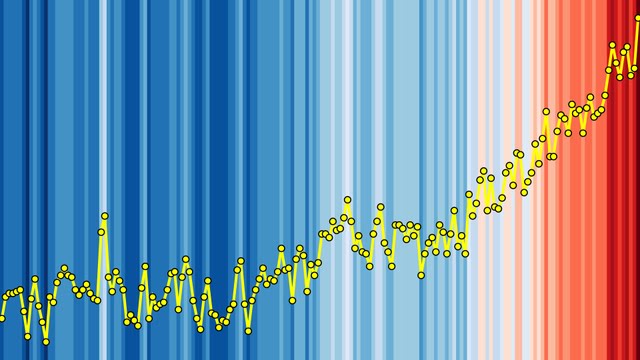
It is a fact that our activities on Earth have caused our planet to warm by over one degree Celsius over the past 200 years. Whilst this does not seem like much, this is the largest fluctuation in global temperature in over 2000 years and has caused an incredible number of impacts across the world.
However, warmer temperatures do not mean that everywhere is hotter all the time. The warming of the world has caused our weather systems to dramatically change, producing the range of unseasonal and extended weather conditions that we now are beginning to accept as normal.
In the UK, the summer of 2026 was dominated by the longest and hottest heatwave since 1976 - in fact, it surpassed it by almost every measure. Temperatures reached over 30 °C for some areas in the south, with a climate somewhat similar to the Mediterranean. But, contrast this 2024, when our rainfall was much higher than average levels, and getting higher year-on-year, and we have to ask ourselves whether the weather is just getting warmer.
The trend is actually twofold, firstly the weather is getting warmer (as we know), but secondly that extremes are becoming more common. Heatwaves, snowfall, and excessive rain and winds are all becoming more frequent as our climates shift and evolve.
There is also evidence to suggest that our seasons are on the move, with many of the natural markers we look for becoming earlier and earlier. Bluebells are blooming earlier and migratory birds are coming to the UK sooner. Ask any gardener or farmer and they are bound to tell you that at least one flower or crop has arrived earlier than expected. Are we to expect summer weather in winter before too long? Reports suggest that spring has moved forwards by as much as 9 days over the past 25 years, so it is not unfeasible.
The effects of climate change on our planet are greater than many of us ever imagined and will stay around for a very long time. The best climate experts say that even if we completely stop our emissions now, it would still take decades for the Earth’s climate and weather systems to restabilise and return to pre-industrial conditions. But, there is hope, decades are not quite as long as the centuries it took for us to get to this mess.
5. Stop Fossil Fuels
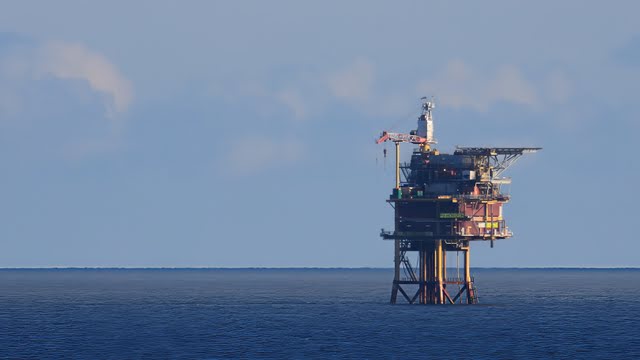
Many people call for us to simply stop using fossil fuels. This section, by my own admission, is not so much an exploration of a myth, but rather a lesson in understanding what is truly necessary for us to stop climate change and why it is such a complex issue.
Fossil fuels have been mined and used for such an incredibly long time that they now underpin a large proportion of our everyday life. Everything from the food we eat to the clothes we wear rely on fossil fuels and it would not be too much of an exaggeration to say that they have become essential.
Our current need and demand for non-renewable resources means that it is extremely difficult to remove fossil fuels from our industries, and, as discussed earlier, economics drives our post-industrial world - capitalism provides fuel to the fire. There is no other issue which has been so strongly rooted in our society, and I doubt that we will see another. Ripping out fossil fuels is equivalent to ripping out the heart of both industry and the economy.
But what does it underpin? Here are just a few examples of our reliance:
-
The food we eat has to go on a journey before it ever reaches our plates. Potatoes from Kent travel on fossil fuel powered lorries to reach shops in Yorkshire where consumers travel in petrol cars to bring them home to their houses in Doncaster. Lamb from New Zealand is cooled during shipping on huge diesel container ships as part of the journey to fridges in Lewisham. Bananas fly in comfort from Ecuador to Heathrow on board cargo planes full of jet-fuel. Almost every step of the food supply chain relies on fossil fuels, and I have not even mentioned what powers our tractors…
-
Plastic packaging is still used on many of our products, with its cost and ubiquity massive drivers against the rise of sustainable paper and card packaging. Plastics are produced from crude oil mined from our rapidly-dwindling underground oil fields and, as we have seen, cannot be endlessly recycled - leading to an endless requirement for crude oil. Whilst they were once thought to be a wonder material, the same plastics which brought us into the modern world now pollute our ocean with microplastics and fill our landfills with waste that lasts for millennia.
-
The original waste product of crude oil processing was tar (or bitumen), a thick black liquid that sets into a toughened black solid. So tough, in fact, that we thought it was perfect for manufacturing roads. Asphalt is the basis for the vast majority of road surfacings across the world and is made by combining tar with gravel to produce a smooth and hard-wearing layer for our vehicles to drive on. Alternatives to tar for asphalt are currently being explored alongside more novel road surfaces, offering hope for the future of our reliance on tar.
-
Finally, it is now incredibly difficult to find purely natural clothing, with so much of what we wear today manufactured from synthetic polyester and nylon. Both of these fibres are made by processing crude oil to produce long and flexible polymers, which have much better properties than natural fibres like wool and cotton, including durability and price. Although we are beginning to explore ways of creating these polymers in the laboratory without the need for crude oil, the vast majority of clothing today is made using crude oil.
The core message I want to convey here is that the fight against fossil fuels is not just one of energy, but also covers some of the world’s largest industries. Before we can cut our reliance on crude oil, we need to find new renewable ways of building, manufacturing, and transporting goods.
Conclusion
After reading this all, you are probably not filled with hope. In fact, this seems like quite a gloomy article. But, I believe that a deeper understanding of the problem of climate change can help us to reduce the impact of the causes of climate change. This effort is a marathon, not a sprint, and we need international cooperation between citizens, companies, and governments in order to help prevent this, the biggest challenge ever to face humanity.
The work, however, starts with us - the citizens. We need to learn how to live sustainably by understanding everything from recycling to food sourcing. Making the right choices now may seem like a small effort, but if we stand united with one voice then it becomes a much larger force.
As for governments and companies, they need to heed the warnings of scientists and begin to make changes for the planet, despite what that may mean for their business and popularity. There is a heavy reluctance in government to write climate policy and it is such a complex issue that sometimes I think it would be best if scientists write it themselves, but we must lobby for policy to be passed or else nothing will be done until it is too late.
So, will you join the activism?
Sources
- Assoune, A. (2021). 10 Advantages Of Synthetic Fibers You Need To Know. Panaprium. Available at: panaprium.com/blogs/i/synthetic-fiber-advantages [Accessed 25 July 2026].
- British Plastics Federation (2023). How is Plastic Recycled? A Step by Step Guide to Recycling. [online] British Plastics Federation (BPF). Available at: bpf.co.uk/plastipedia/sustainability/how-is-plastic-recycled-a-step-by-step-guide-to-recycling.aspx [Accessed 25 July 2026].
- Cermak, A. (2024). What’s the difference between climate change and global warming? [online] NASA Science. Available at: science.nasa.gov/climate-change/faq/whats-the-difference-between-climate-change-and-global-warming [Accessed 25 July 2026].
- Chinthoju, P. and Vashishta, R. (2025). Understanding the complete efficiency picture of Electric vehicles. [online] EVreporter. Available at: evreporter.com/understanding-the-complete-efficiency-picture-of-electric-vehicles [Accessed 25 July 2026].
- Herring, D. and Lindsey, R. (2022). Can we slow or even reverse global warming? [online] Climate.gov. National Oceanic and Atmospheric Administration. Available at: climate.gov/news-features/climate-qa/can-we-slow-or-even-reverse-global-warming [Accessed 25 July 2026].
- King, S. (2024). How climate change is shifting our seasons and threatening UK wildlife. BBC Weather. [online] 26 Dec. Available at: bbc.co.uk/weather/articles/cly24dxeer1o [Accessed 25 July 2026].
- Lindsey, R. and Dahlman, L. (2025). Climate change: global temperature. [online] Climate.gov. National Oceanic and Atmospheric Administration. Available at: climate.gov/news-features/understanding-climate/climate-change-global-temperature [Accessed 25 July 2026].
- Marcos, J. (2026). 12 Reasons why plastic recycling is failing so badly. The Conversation. [online] doi:10.64628/aao.nfprf4cg5.
- Met Office (2025). Annual climate stocktake shows weather records and extremes now the norm in UK climate. Met Office. [online] 13 July. Available at: metoffice.gov.uk/about-us/news-and-media/media-centre/weather-and-climate-news/2025/annual-climate-stocktake-shows-weather-records-and-extremes-now-the-norm-in-uk-climate [Accessed 25 July 2026].
- Poynting, M. (2021). What is net zero and is the UK on track to achieve it? BBC News. [online] 18 Oct. Available at: bbc.co.uk/news/articles/cx238yyr40qo [Accessed 25 July 2026].
- ScienceInsights (2026a). How is plastic recycled? Steps, types, and limits. [online] ScienceInsights. Available at: scienceinsights.org/how-is-plastic-recycled-steps-types-and-limits [Accessed 25 July 2026].
- ScienceInsights (2026b). Is Lithium Mining Bad for the Environment? [online] ScienceInsights. Available at: scienceinsights.org/is-lithium-mining-bad-for-the-environment [Accessed 25 July 2026].
- Velev, K. (2025). Global Temperature - Earth Indicator. [online] NASA Science. Available at: science.nasa.gov/earth/explore/earth-indicators/global-temperature [Accessed 25 July 2026].
- Watson, R.T., Rodhe, H., Oeschger, H. and Siegenthaler, U. (1990). Greenhouse Gases and Aerosols. In: Climate Change: The IPCC Scientific Assessment. [online] Intergovernmental Panel on Climate Change. Available at: ipcc.ch/report/ar1/wg1/greenhouse-gases-and-aerosols [Accessed 25 July 2026].
- Wikipedia Contributors (2002). Greenhouse gas. In: Wikipedia. [online] Wikimedia Foundation. Available at: en.wikipedia.org/wiki/Greenhouse_gas [Accessed 25 July 2026].
- Wikipedia Contributors (2003a). Asphalt concrete. In: Wikipedia. [online] Wikimedia Foundation. Available at: en.wikipedia.org/wiki/Asphalt_concrete [Accessed 25 July 2026].
- Wikipedia Contributors (2003b). Temperature record of the last 2,000 years. In: Wikipedia. [online] Wikimedia Foundation. Available at: en.wikipedia.org/wiki/Temperature_record_of_the_last_2,000_years [Accessed 25 July 2026].
Read more about how I use Wikipedia.
Image Credit:
- “Electric charging of Tokyo Gas car” by Syced, CC0, via Wikimedia Commons [modified]
- “Plastic food container in a Hong Kong market” by Woakamkurhram, CC BY-SA 3.0, via Wikimedia Commons [modified]
- “Environmental education” by Alex Indigo, CC BY 2.0, via Wikimedia Commons [modified]
- “Warming stripes BEHIND line chart - global surface temperature” by RCraig09, CC BY-SA 4.0, via Wikimedia Commons
- “Unocol Oil Production Platform P9 Horizon North Sea” by ImagePerson, CC BY 4.0, via Wikimedia Commons [modified]