The Sun, The Moon... and a Colander?
Thu, 13 Aug, 2026
Read in 4 minutes
VIDEO TRANSCRIPT - My story of the 2026 solar eclipse, featuring a colander.
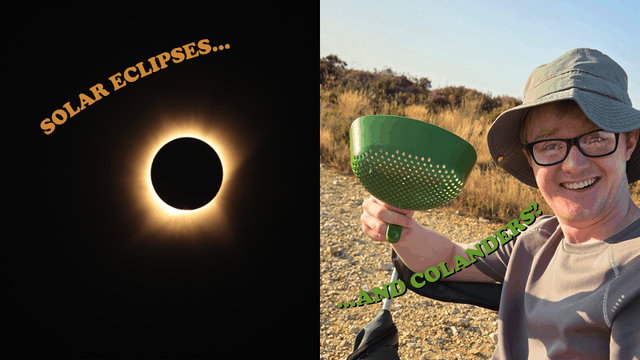
You can view the video here: The Sun, The Moon… and a Colander?
Yesterday [12/08/2026], there was a solar eclipse - it was all over the news, you can’t have missed it. Hopefully you didn’t miss it and saw some of it yourself!
There’s some pictures below that show what that eclipse looked like in Spain and Portugal - it was a full solar eclipse over there.
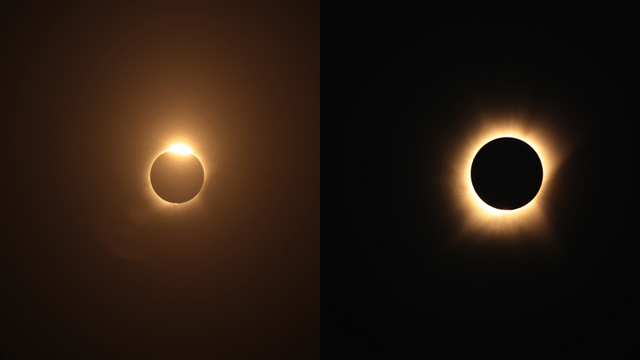
But, here in England, we had a partial solar eclipse - somewhere between 90 and 95 % coverage. That, still, was very, very impressive - but I had a problem yesterday: I didn’t have any eclipse glasses.
So, my party went to the highest place we could find (the highest point in the area) and used a couple of different techniques that had been shared online - and I wanted to share how successful they were.
The first technique that we had was to use a colander.
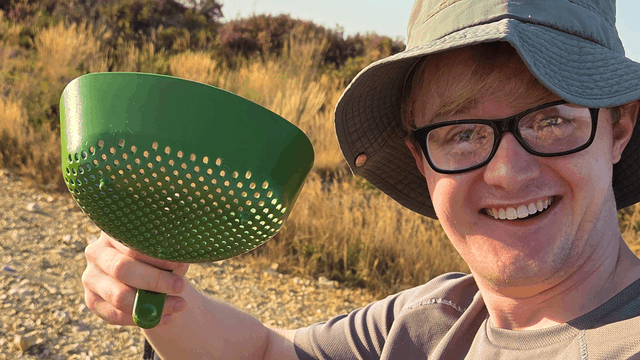
The idea being that you get your colander, the sunlight shines through it and it acts like lots of different pinhole cameras that you can just hold up to a sheet of paper and you can see it [the eclipse].
These photos show how successful that was:
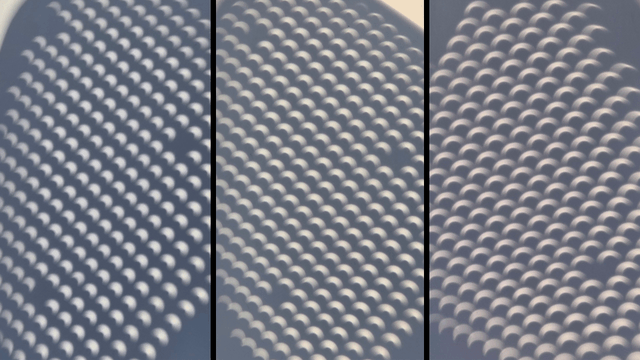
I think, really, it worked quite well. You can see the sun really, really clearly. So, that’s a success! That tip works, next time there is an eclipse - which I think, unfortunately, is 2090 now that we have actual proper solar eclipses, so it is a long time - I know I can use a colander.
The other technique that was shared online was the traditional pinhole camera, and we tried that out too. Here’s some photos of that:
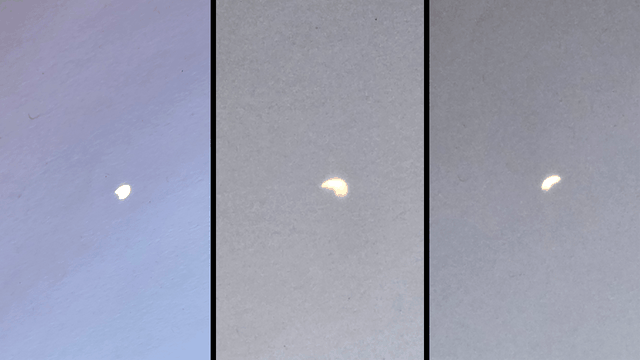
I think the pinhole camera was less successful than the colander. The colander gave really quite a good effect and it was able to show all of the different stages - whereas the pinhole camera didn’t quite manage to capture it all. So, swings and roundabouts, I guess. But, very, very exciting to see.
An extra photo (not featured in the video) which is also worth is a look is this one taken through welding glass:
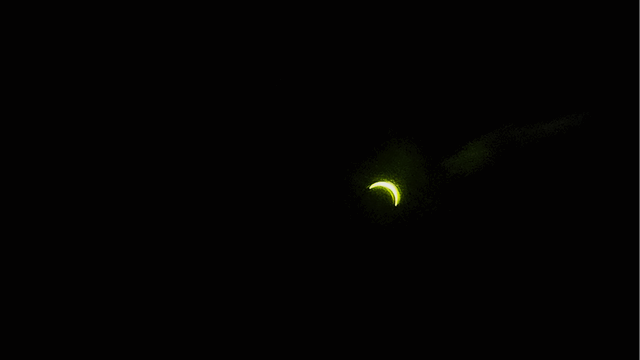
It shows what the eclipse might have looked like through eclipse glasses, with a slither of the Sun still remaining during the partial solar eclipse. As a reminder, welding glass is not rated for this, so please do not try this for yourself!
During a total solar eclipse, like they had over in Spain and Portugal, it would be completely dark - all of the animals and wildlife go to sleep, all the nocturnal animals begin waking up, and then they get really, really weirded out when it gets sunny again.
Over here in England, obviously we had a partial solar eclipse, it wasn’t quite to that extent. But, it did still get dark and the really odd thing is that when it gets dark at night it’s dark with a different colour. Because, obviously, the sunlight that you get changes colour - the sky changes colour - dependent of the time of day. So actually, what we saw yesterday when it got really dark (and got dimmer) was a bit different to when the sun sets, and that was really interesting to see anyway over here.
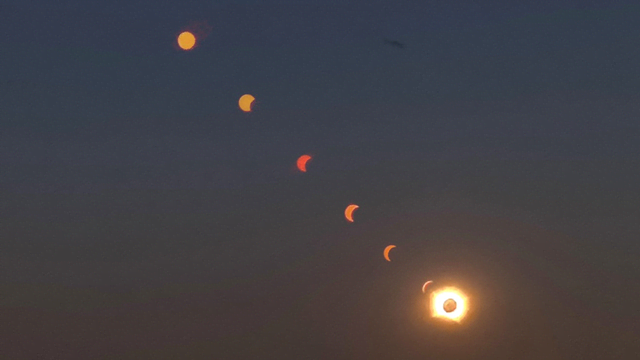
Hopefully, you all appreciated that and you all saw that as well. But, I will finish with a really nice photo that came over from Spain, showing the different stages of the eclipse - here it is, it looks really, really good (I think you’ll agree):
That’s all for today.
Sources
Image Credit:
- “2026-08-12 Embalse de Úzquiza Eclipse Diamond ring” by Thomas Holbach, CC BY-SA 4.0, via Wikimedia Commons [modified]
- “2026-08-12 Embalse de Úzquiza Eclipse 02” by Thomas Holbach, CC BY-SA 4.0, via Wikimedia Commons [modified]
- “Fotomontaje del eclipse total de 2026 visto desde Logroño” by Artistosteles, CC BY 4.0, via Wikimedia Commons [modified]